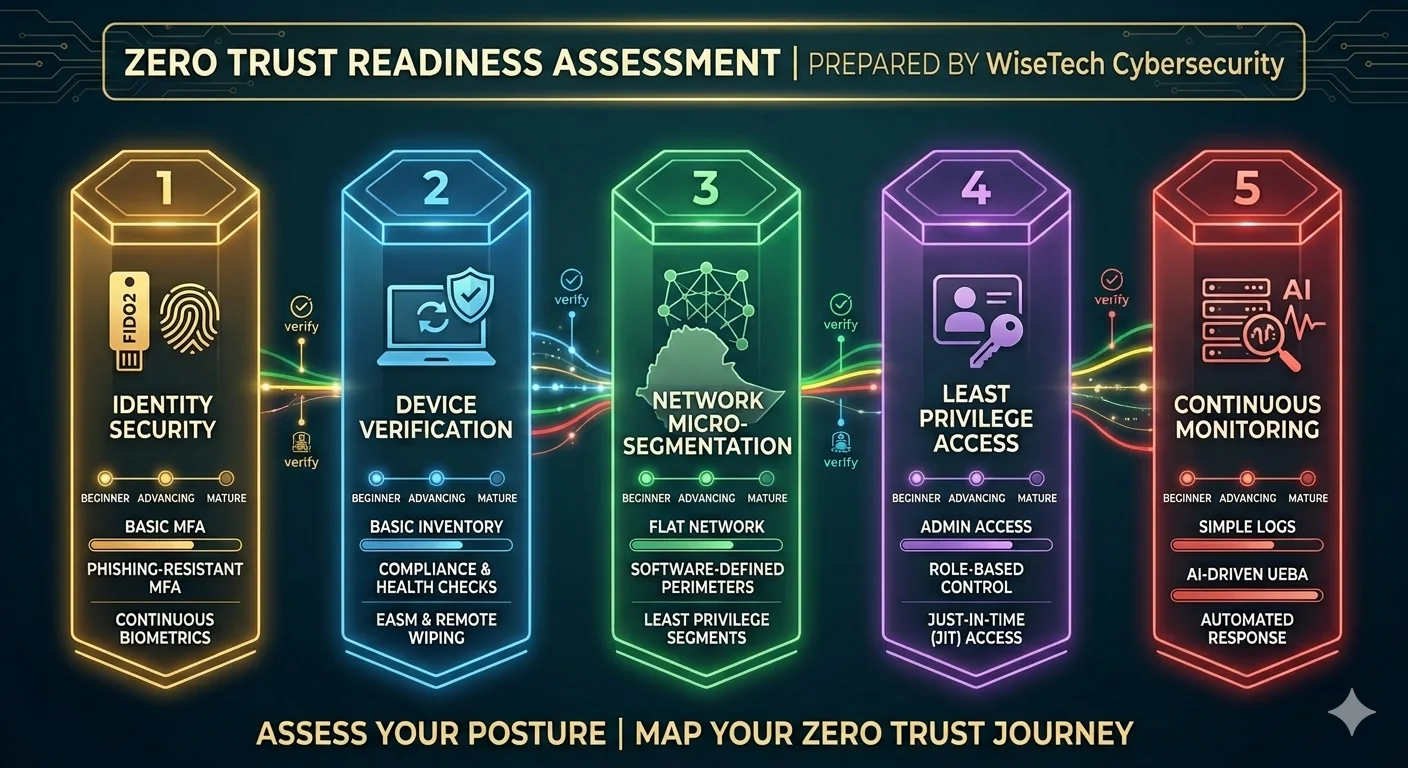
As Ethiopia accelerates its digital journey through the Digital Ethiopia 2030 framework and the full rollout of the National ID (Fayda), our digital attack surface has expanded at an unprecedented rate. In 2026, Ethiopia remains one of the most targeted nations in the region, with threats becoming more automated, personalized, and persistent.
At WiseTech, our team has spent over 15 years defending national security and banking systems. Based on our current threat intelligence, here are the top 5 cyber threats facing Ethiopian organizations this year.
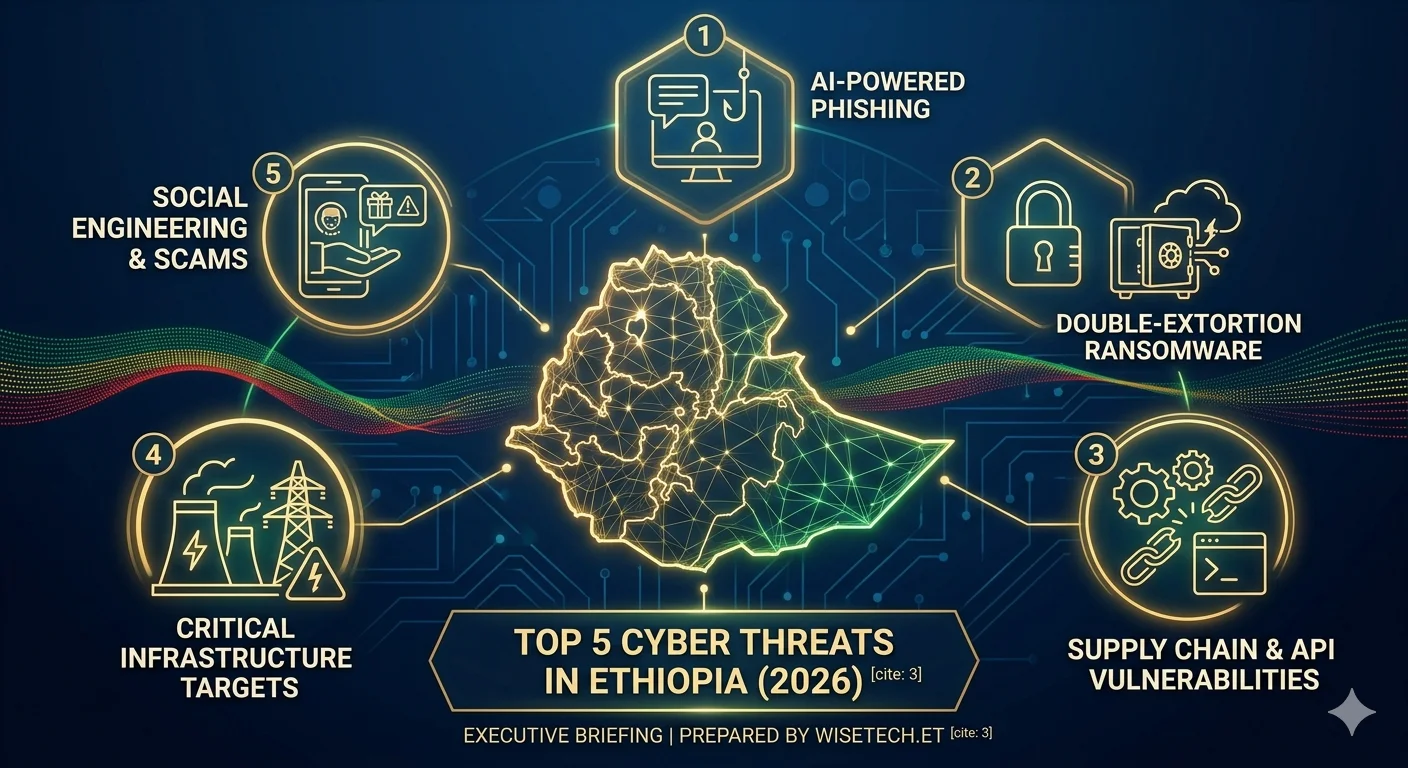
1. AI-Powered "Hyper-Personalized" Phishing
The days of "broken English" phishing emails are over. In 2026, attackers are using Generative AI to craft perfect lures in Amharic, Afaan Oromoo, Tigregna, and English. These attacks often impersonate local banks, government ministries, or trusted colleagues.
- The 2026 Twist: We are seeing a surge in "Omni-Channel" attacks—where a target receives a WhatsApp message, followed by a believable AI-generated voice call (vishing), and then a phishing email, all working together to steal administrative credentials or authorize fraudulent payments.
2. Double-Extortion Ransomware
Ransomware has evolved from simple data encryption to "double extortion." Attackers no longer just lock your files; they exfiltrate sensitive customer data and threaten to leak it publicly or sell it to competitors if the ransom isn't paid.
- Critical Risk: For the Ethiopian banking and telecom sectors, this poses a massive reputational risk and a direct violation of the latest Data Protection Proclamations. Recovery is no longer just about backups; it’s about preventing the initial data theft.
3. Supply Chain & API Vulnerabilities
As Ethiopian businesses integrate more fintech apps and third-party services via APIs, the "weakest link" is often not your own system, but a vendor’s.
- The Threat: Attackers are targeting the API integrations between banks and external payment platforms. A single vulnerability in a third-party API can provide a "backdoor" into your core infrastructure, bypassing traditional perimeter defenses like firewalls.
4. Targeting Critical Infrastructure (OT/ICS)
With the completion of the Grand Ethiopian Renaissance Dam (GERD) and the expansion of our national power grid, Operational Technology (OT) has become a primary target.
- The Impact: These are no longer just "data" attacks; they are physical-world threats. Sophisticated actors are attempting to gain access to Industrial Control Systems (ICS) to cause service disruptions. This requires a specialized security approach that differs from standard IT security.
5. Social Engineering & Election-Related Scams
Exploiting the current political and social climate remains a favorite tactic for cybercriminals. In early 2026, we observed a spike in WhatsApp-based identity theft exploiting interest in the 7th General Election and national development projects.
- The Tactic: Attackers use social pressure—claiming a "health emergency" or "urgent election fee"—to trick users into sharing six-digit verification codes, leading to immediate account takeovers and financial fraud.
How WiseTech Can Help
In 2026, "off-the-shelf" security is not enough. You need a partner who understands the local threat landscape and the specific regulatory requirements of INSA and the National Bank of Ethiopia (NBE).
With over 75 years of collective experience in national-scale defense, WiseTech.et offers:
- Security-First DevSecOps: Building secure APIs and software from the ground up.
- Infrastructure Hardening: Securing the networks that power our nation.
- Specialized RCA: Finding the root cause of breaches before they repeat.