What exactly is Zero Trust?
Zero Trust is not a specific software or a single product. It is a security framework based on one simple realization: Never Trust, Always Verify. In a Zero Trust Architecture (ZTA), it doesn't matter if you are sitting in the head office or a cafe in Bole; the network treats every access request as a potential threat until it is proven otherwise.
The 5 Essential Pillars for Implementation
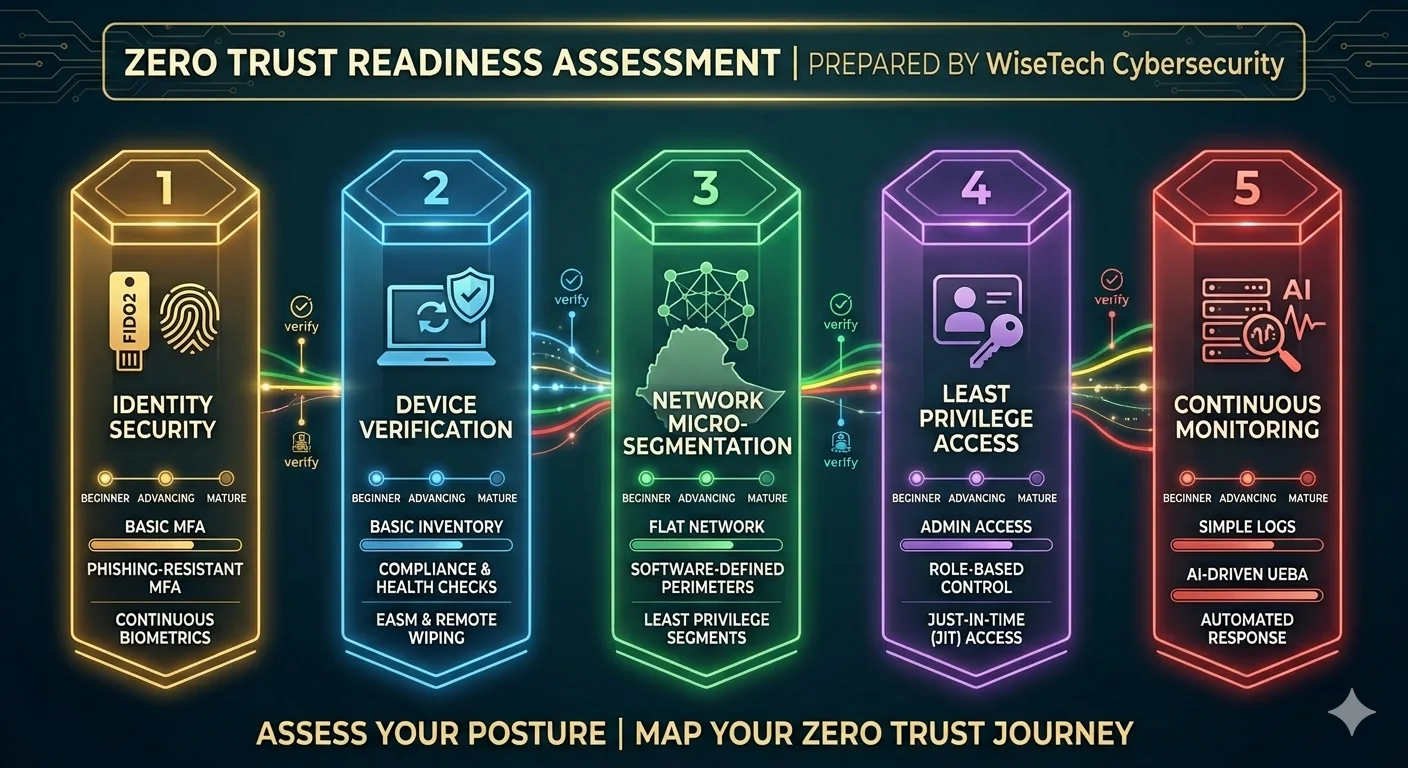
If your organization is looking to move toward a Zero Trust model, you don't need to change everything overnight. Instead, you must focus on these five foundational pillars:
1. Identity Security (The New Perimeter)
In Zero Trust, Identity is the most important element. You must be able to prove exactly who is accessing your system.
- What's needed: Multi-Factor Authentication (MFA) is the bare minimum. Ideally, organizations should move toward "Phishing-Resistant" identity tools that don't rely on easily stolen SMS codes.
2. Device Health & Verification
It isn’t enough to know who is logging in; you must know what they are using.
- What's needed: A system that checks the "health" of a laptop or phone before allowing it to connect. If a device is missing its latest security updates or is "jailbroken," it should be denied access to sensitive banking or government data.
3. Network Micro-Segmentation
Traditional networks are "flat"—once a hacker gets inside, they can move anywhere. Zero Trust uses Micro-segmentation to create internal "bulkheads."
- What's needed: Breaking the network into small, isolated zones. If an attacker breaches a single workstation, they are trapped in that small zone and cannot "jump" to your core database.
4. Least Privilege Access
Many employees have "Admin" rights they don't actually need. Zero Trust enforces Least Privilege.
- What's needed: Users should only have access to the specific files and applications required for their job, and only for the time they need them.
5. Continuous Monitoring and Analytics
Zero Trust is a continuous process. You must constantly watch for "odd" behavior.
- What's needed: Automated logs and analytics that can spot a "Red Flag"—such as a user account suddenly downloading 1,000 files in the middle of the night—and automatically lock that account until a human can check it.
Starting Your Journey
Transitioning to Zero Trust is a journey, not a sprint. It requires a shift in mindset from "Who do we let in?" to "How do we verify every single action?"
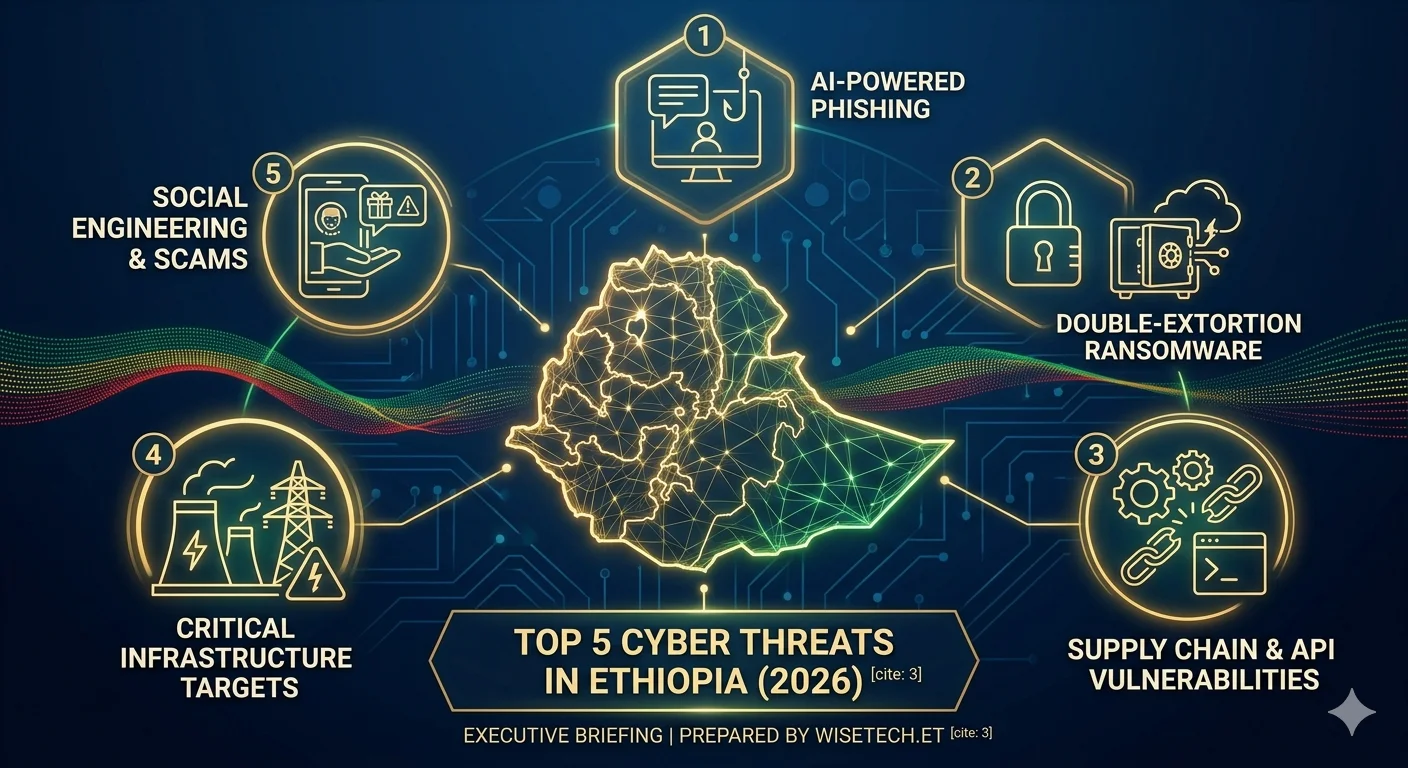
For Ethiopian organizations, especially those regulated by INSA or the National Bank of Ethiopia (NBE), adopting these principles is the most effective way to protect against the automated, AI-driven threats of 2026.
Does your organization have a roadmap for Zero Trust? At WiseTech.et, we specialize in helping leadership teams assess their current posture and design a step-by-step strategy to reach full maturity.